 food.animated
Introduction
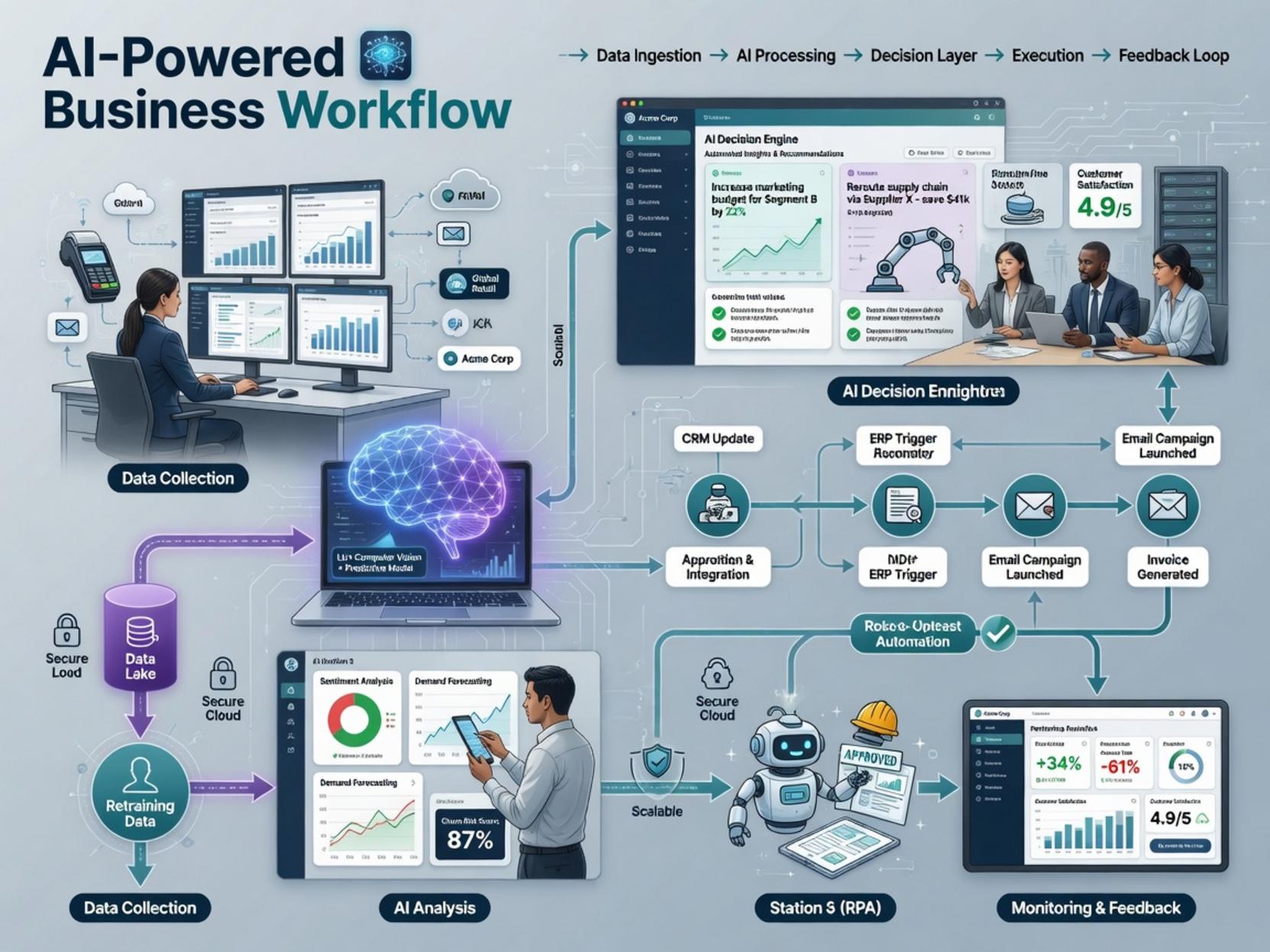
Artificial intelligence is no longer a futuristic concept—it’s a practical engine that propels everyday operations. Companies that embed AI workflows in business see measurable gains in speed, accuracy, and customer satisfaction. At the same time, leaders who invest in enterprise AI workflows, productivity with AI, business automation unlock new levels of scalability, allowing teams to focus on high‑value creativity rather than repetitive tasks. In this post we’ll walk through a proven, step‑by‑step framework that blends these two powerful concepts, so you can start reaping ROI from day one.
—
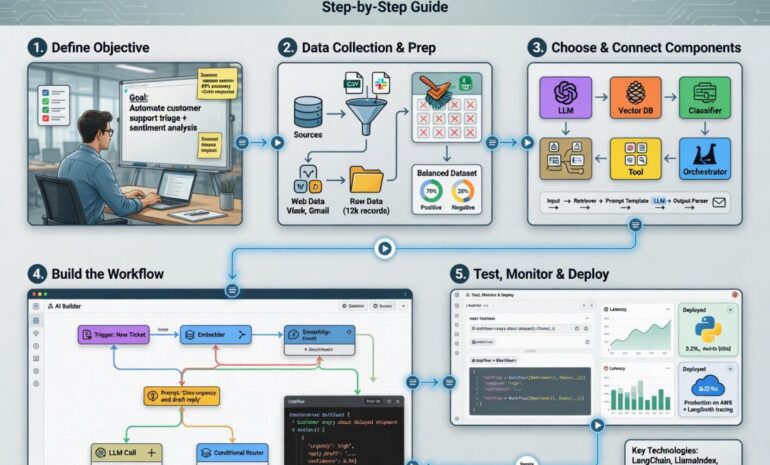
Step‑By‑Step Instructions
1. Map the current process – Begin by diagramming the manual workflow you want to improve. Capture inputs, decision points, and hand‑offs. This visual map becomes the baseline for the AI workflows in business you’ll design.
2. Identify AI‑ready tasks – Look for repetitive, data‑heavy steps (e.g., invoice classification, sentiment analysis, lead scoring). These are prime candidates for automation using enterprise AI workflows, productivity with AI, business automation tools such as natural‑language processing APIs or predictive models.
3. Select the right platform – Choose a low‑code orchestration layer (n8n, Zapier, Microsoft Power Automate) that supports plug‑and‑play AI nodes. The platform should let you embed the exact URL for the ready‑made workflow you’ll reuse, ensuring consistency across projects.
4. Build the AI module – Connect the chosen AI service (e.g., OpenAI, Google Vertex AI) to the workflow. Configure input schemas, set confidence thresholds, and map output fields back to your main process. Test with a sample dataset to verify accuracy.
5. Integrate and trigger – Hook the AI module into the larger process map. Decide whether the workflow runs on a schedule, via webhook, or when a specific event occurs (e.g., a new email in the inbox). This is where AI workflows in business truly shine, converting a once‑manual step into a seamless, real‑time action.
6. Monitor, refine, and scale – Use built‑in analytics to track error rates, processing time, and user feedback. Adjust model parameters or add new decision branches as needed. Over time, the same framework can be repurposed for other departments, reinforcing enterprise AI workflows, productivity with AI, business automation across the organization.
—
Tips for Maximizing Impact
– Start small – Pilot the AI workflow on a low‑risk dataset before expanding enterprise‑wide.
– Leverage pre‑trained models – Fine‑tune existing models rather than building from scratch to cut development time.
– Implement fallback logic – Route low‑confidence predictions to a human reviewer; this preserves quality while the AI learns.
– Document version control – Keep a changelog of model updates and workflow revisions; SEO‑friendly documentation also helps internal adoption.
—
Alternative Methods
If your organization prefers a more code‑centric approach, consider the following alternatives:
– Custom Python scripts using libraries like `pandas`, `scikit‑learn`, and `fastapi` for endpoint exposure.
– Serverless functions (AWS Lambda, Azure Functions) that trigger AI inference on demand.
– Dedicated RPA tools (UiPath, Automation Anywhere) that embed AI models via REST calls, providing a visual drag‑and‑drop experience similar to low‑code platforms.
Each method can still be aligned with the overarching goal of embedding AI workflows in business and strengthening enterprise AI workflows, productivity with AI, business automation—the choice depends on your team’s skill set, compliance requirements, and scalability needs.
—
Conclusion
Integrating AI workflows in business isn’t a one‑off project; it’s a strategic shift toward continuous innovation. By following the structured steps above, you empower your organization to harness enterprise AI workflows, productivity with AI, business automation that adapt as market demands evolve. Remember, the most successful implementations start with a clear map, iterate fast, and scale responsibly. Embrace the technology today, and watch your operational efficiency soar tomorrow.